

Reisebericht von Marko Doboš zum Naturformen-Eintrag S. iranicum from Siyah Bisheh
S. iranicum, Siyah Bisheh, Alborz Mts., Iran
Dear Friends,
last summer I was cycling from Zagreb to Teheran and visited some Semp's in habitat.
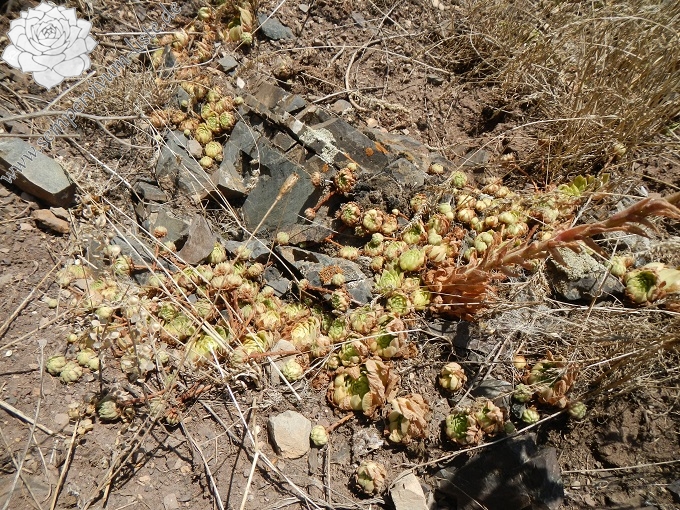
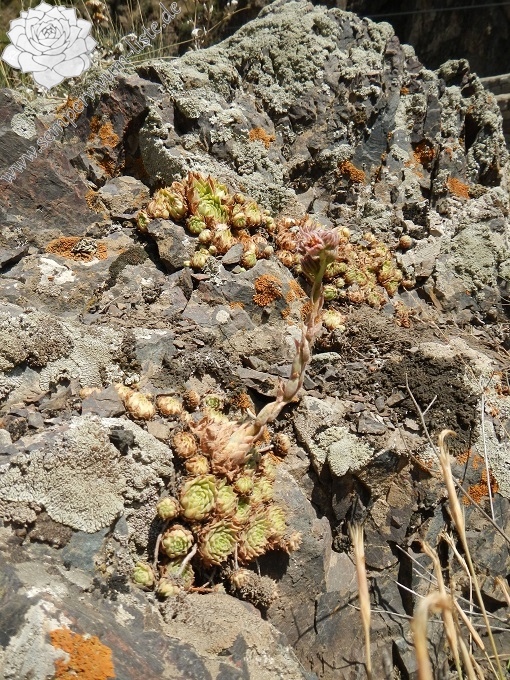
In the end of my trip (24.8.2014.), near village Siyah Bisheh, at 2270m, in Alborz Mts, Iran
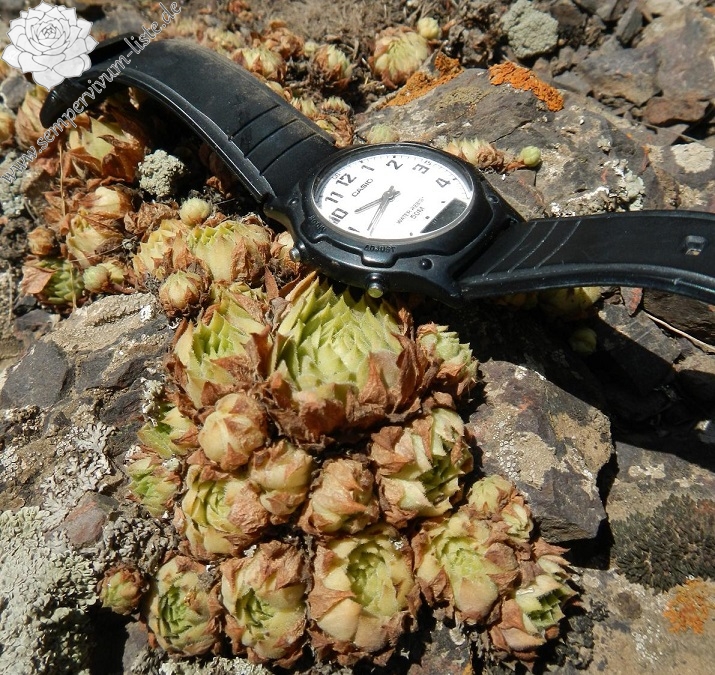
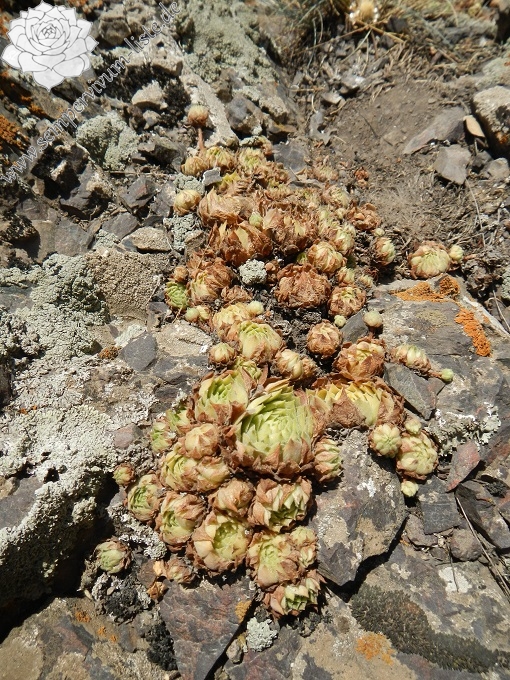
I found Sempervivum iranicum .
It was the ultimate reward for this trip (actually, it was one of many rewards).
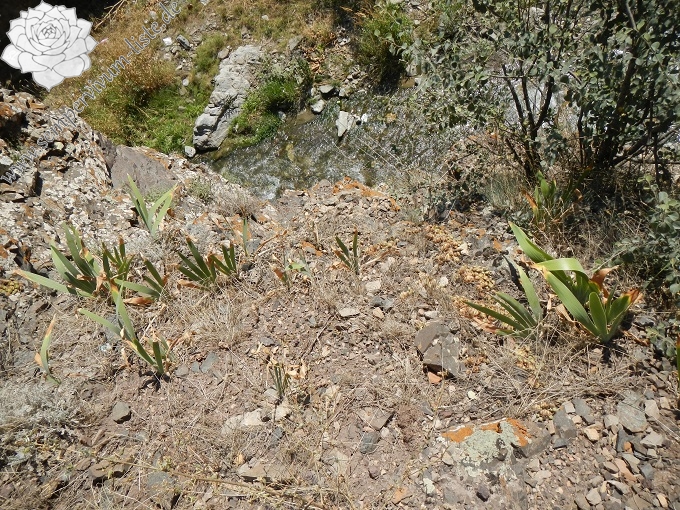
Plants were growing just by the road in a canyon above the creek together with Iris species
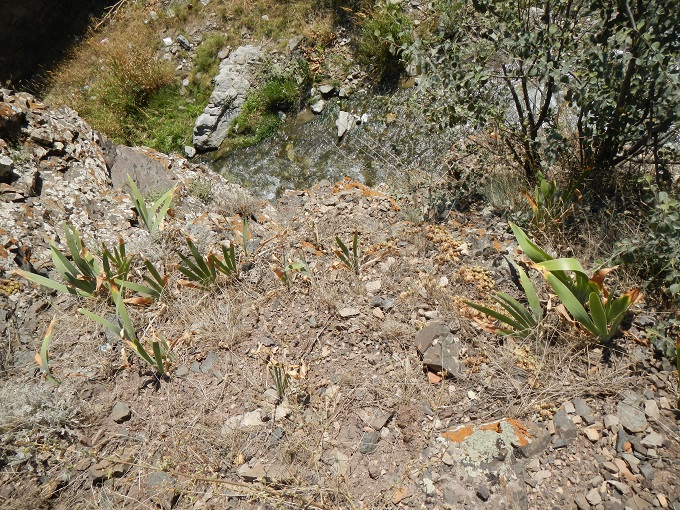
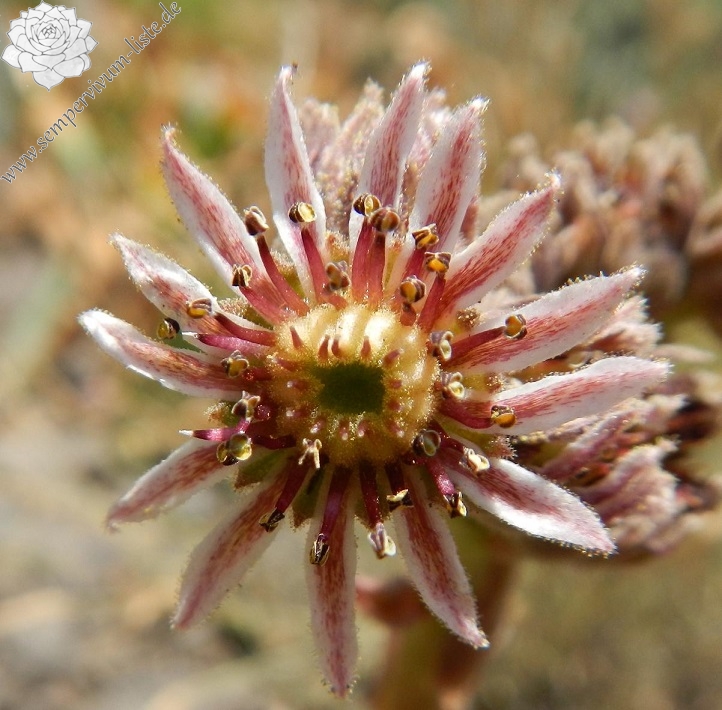
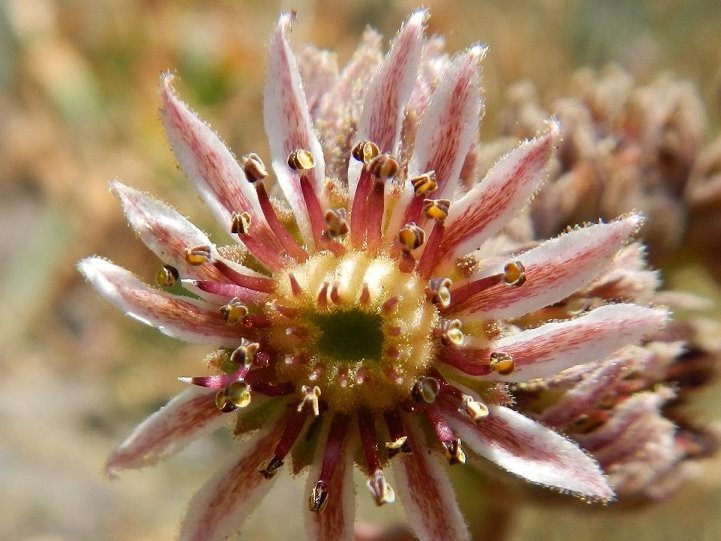
I was even rewarded with a flower, so i could confirm my ID of the species
Next day I had to climb at 3300m with my bike. There were no Semps there, but it was spectacular
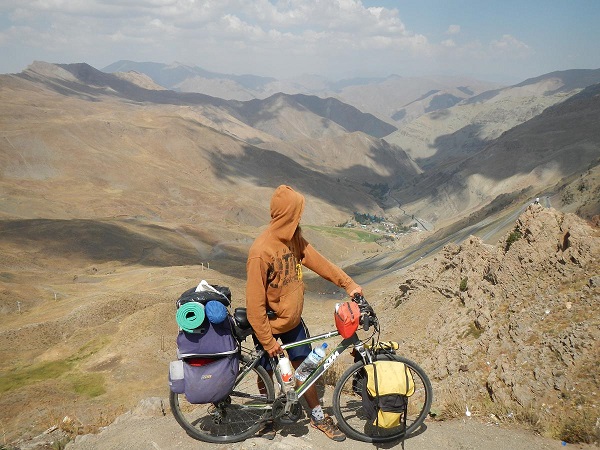
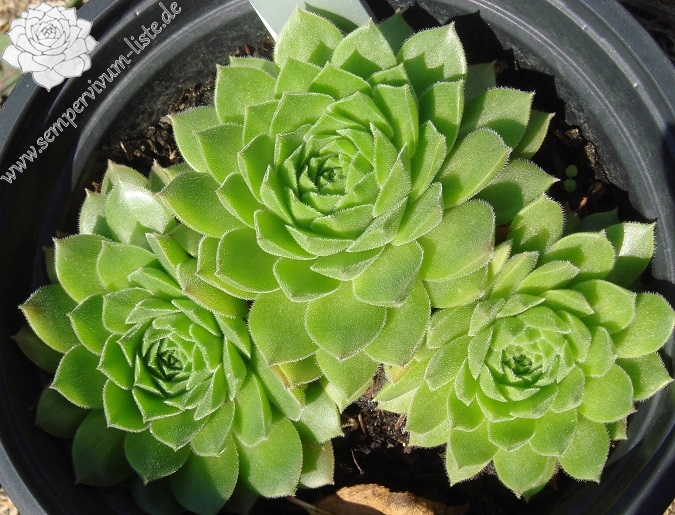
I took some samples and this plant is now in culture. You can find at as:
Sempervivum iranicum
Chalus road, near village Siyah Bisheh, 2270m, Alborz Mts, Iran
collector: Marko Doboš (CRO), 24.8.2014.
I don't use personal code as a collector, I just write my name,country and a date. If you think I should use a code, please write to me why should I use it. It was something I was asking myself, but maybe we can discuss this on some other place.
There is also a GPS coordinates for this plant, but I'm unwilling to publish it for conservation reasons, hope you understand.
It is growing fine although it didn't produce any offsets. I'm sure in the future it will be enough offsets for everyone, so if you're gonna visit this amazing habitat, please don't take any more plants from nature.
Zum Antworten auf den Reisebericht muss man sich hier auf www.sempervivum-liste.de einloggen.


Comments
Antwort von Sempernicki am 03.09.2015
Hello, dear Marko,
wow, you've been to Iran. Twenty years ago that was my dream too (to watch birds) and I'd already looked for lady's clothes especially for Iran. But then I had not enough courage to go into the wilderness of Iran, even in a group.
You really have seen S. iranicum, wonderful. In the flower the top of the style is bent backwards abruptly - the typical form for S. iranicum. Eggli, Urs (Hrsg): Sukkulentenlexikon, Bd.4, 2003, S. 349
I can't see this style in the other "S. iranicum" in our Naturformen-Lexikon. Do you think that you present the first real S. iranicum here? Or could you imagine that the top of the style can break easily?
It's a pity that it was so dry in that summer. But your plants in culture seem to be very healthy. They have got short hairs, yes?
(Im mittleren Teil bin ich auf die abrupt zurückgebogene Griffelspitze in der Blüte eingegangen, weil dies die richtige Form sein soll - auch laut "Eggli, Urs (Hrsg): Sukkulentenlexikon, Bd.4, 2003, S. 358. Ich habe gefragt, ob wohl alle andern S. iranicum here im Naturformen-Lexikon falsch sind. Im letzten Teil habe ich gefragt, ob die Rosetten kurz behaart waren.)
Thank you for your pictures and the text.
LG
Sempernicki
Nach oben
Antwort von Marko Dobos am 03.09.2015
Dear Sempernicki,
Iran is more than safe, people are extremely friendly, everybody wants to talk to you, they invite you home and offer you food. Most people can speak English and mentality is very similar to European. You would probably need only scarf, but ofc. most Iranian women don't wear it in mountains. I recommend Iran to everyone :)
Plants in your lexicon (from Ardanuç and Waterfalls near Sisian) both have colored tips
and the original description of the plant says that tip is not colored. As you've said, when I visited this habitat, it was baking hot summer, but plants were uniformly green. And yes, plants I've observed and collected have short hairs.
Original Description (English translation of the Latin Description): New species – rosette usually the size of that of Sempervivum tectorum L., in particular 5-7 cm wide, but composed of much more numerous and shorter leaves, and thus more crowded – to be included close to Sempervivum schlehanii Schott, which it resembles, due to the leaves being densely velvety on both sides; thin,very long stolons (up to 10 cm long) grow out from the base of the rosette, prostrate and finally nude; leaves of the rosettes are blue-green, of uniform colour (tip not coloured nor brownish), both below and above densely and persistently sub-velvety and minutely pubescent (soft hairs at the margin, only slightly longer, not ciliate); all the leaves (ex cept the younger inner ones, which are shorter and sharply cuspidate) are oblong and acute (neither cuspidate nor dilated at the distal part); the most external leaves are 2.5-3 cm long and 1-1.5 cm wide; flower-bearing stalk 15-20 cm long, robust, densely leafy, covered with papillae and minutely pubescent-glandular; leaves on the flower stalk up to 2.5-3 cm in length and 1-1.5 cm wide, briefly acuminate, the upper leaves only slightly shorter; at anthesis the inflorescence is compact, with three forked branches and tips of 3-6 flowers, at fructescence 3-4 cm long; flowers 12-14-meric, with patent petals 2.5 cm in diameter; the colour of the calyx is green to pale yellow, it is highly bristly and glandular, with oblong-lanceolate segments half as long as the petals (6 mm), which are linear-lanceolate, gradually becoming subulate-acuminate (2 x 14 mm), pink with generous whitish margins; the filaments are purple and approx. half as long as the petals, sparsely and lightly hairy; anthers dark-purplish; carpels 12-14, green and minutely glandularhairy, 2.5 mm long; at advanced fructescence they form a small star-shaped crown 10-12 mm in diameter (with styles spread and reflected)
SOURCE: Klaus Schropp, Sempervivums in Iran (http://www.crassulaceae.ch/uploads/file ... nition.pdf)
I would't say your plants are necessary wrongly labeled, because this species lives in the large area, so morphological variation is possible.
Antwort von Sempernicki am 06.09.2015
Thank you!